
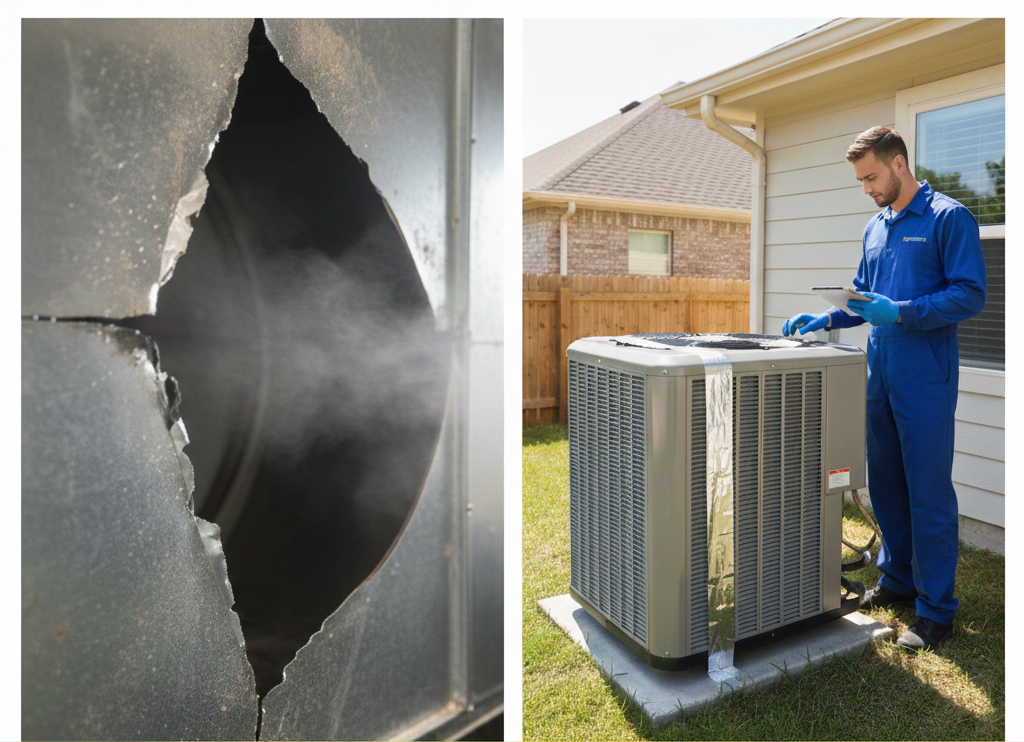
Heating and cooling systems depend on sealed ductwork to move air through every room of a home. When ducts develop leaks, conditioned air escapes before it reaches the living space. This leads to uneven temperatures, higher utility bills, and unnecessary strain on the HVAC system. Many homeowners notice hot and cold spots yet assume the equipment itself is failing. In many cases the real issue lies inside the duct network hidden in ceilings, attics, or crawl spaces.
Small gaps or loose joints may appear minor at first glance, yet they can waste a surprising amount of conditioned air. Some studies estimate that homes lose twenty to thirty percent of heated or cooled air through leaks. This lost air forces the system to run longer cycles while delivering less comfort. Learning how duct leaks occur and how they can be repaired helps homeowners protect energy use and indoor comfort.
Understanding repair methods is the first step toward restoring proper airflow. Homeowners who want practical guidance often review leaky duct repair tips to learn how sealing gaps and reinforcing connections can restore system performance. With the right approach and attention to detail, duct repairs can greatly improve comfort throughout the home.
Why HVAC duct leaks cause comfort and energy problems
Ductwork acts as the delivery path for heated or cooled air produced by an HVAC unit. When this pathway develops gaps or loose connections, conditioned air escapes before reaching the intended rooms. Instead of flowing into living areas, air leaks into attics, crawl spaces, basements, or wall cavities.
This air loss forces the system to run longer to reach the thermostat setting. The longer runtime increases energy use while still leaving some areas uncomfortable. Rooms far from the air handler often feel the greatest impact because they already rely on longer duct runs.
Leaks can also allow unfiltered air to enter the duct system. Dust, insulation fibers, and attic debris may be drawn into the airflow. This lowers indoor air quality and spreads particles throughout the home.
Common comfort issues linked to duct leaks include:
- Hot or cold spots in certain rooms
- Weak airflow from supply vents
- Higher energy bills without increased usage
- Excess dust in living spaces
- Long HVAC cycles that rarely reach the desired temperature
These symptoms often appear gradually, which makes the problem harder to recognize. Many homeowners assume the equipment itself needs replacement when the true cause is air escaping through hidden gaps.
Common locations where duct leaks develop
Duct leaks rarely appear in the middle of a straight metal section. They are far more likely to develop at joints, seams, and connection points. Areas exposed to vibration, temperature swings, or movement tend to loosen over time.
Duct joints and seams
Many duct systems contain several connection points where sections meet. These joints may be secured with screws or clamps. Over time the sealing material around them can dry out or crack, leaving narrow openings where air escapes.
Flexible duct connections
Flexible ducts connect branches of the system and help route air through tight spaces. The outer insulation layer and inner liner can loosen near collars or takeoffs. When clamps weaken or tape loosens, airflow begins escaping at the connection.
Air handler and plenum connections
The supply plenum sits directly above the furnace or air handler and distributes air into the duct network. This high pressure area often develops leaks where ducts attach to the plenum box.
Because these areas carry the highest airflow volume, even small gaps can release a significant amount of conditioned air.
Warning signs that your ductwork may be leaking
Duct leaks are hidden from view in most homes, yet several warning signs can reveal their presence. Paying attention to these clues allows homeowners to address problems early.
One of the most noticeable signs is uneven room temperature. Some rooms may feel comfortable while others remain too warm or too cool even when vents are open.
Another common clue is weak airflow from supply vents. If the blower seems to run normally yet the airflow feels faint, air may be escaping before reaching the vent.
Higher energy bills without increased HVAC use can also indicate duct leakage. When conditioned air escapes into unused spaces, the system must run longer to reach the thermostat setting.
Dust accumulation may also increase when leaks draw attic or crawl space air into the system. This unfiltered air circulates throughout the home and settles on surfaces more quickly.
- Rooms that struggle to maintain temperature
- Whistling or rushing sounds near duct joints
- Visible gaps or loose tape on ducts
- Dust buildup near supply vents
- Insulation around ducts that appears disturbed
Recognizing these signs early can prevent further strain on the HVAC system and restore balanced airflow throughout the home.
Methods used to repair leaking HVAC ducts
Repairing duct leaks involves sealing openings and reinforcing connections so that conditioned air remains within the system. Different methods are used depending on duct material and leak location.
Mastic sealant
Mastic is a thick paste applied over joints and seams. Once it dries it forms a durable seal that blocks air leaks. This material works well on metal ducts and remains flexible even as the system expands and contracts with temperature changes.
Foil backed HVAC tape
Foil tape is often used along seams or small gaps. Unlike common cloth duct tape, foil tape resists temperature changes and remains attached for longer periods. It is commonly used together with mastic for stronger sealing.
Mechanical fasteners and clamps
Loose connections can be reinforced using screws or metal clamps. This step secures the joint before sealing material is applied. Strong mechanical connections prevent future separation when airflow pressure changes.
Professional technicians often use a combination of these techniques to create a lasting seal throughout the duct system.
DIY duct repair steps homeowners can try
Some accessible sections of ductwork can be repaired by homeowners who feel comfortable working in attics or crawl spaces. Safety and careful inspection should always come first.
Before beginning repairs, turn off the HVAC system at the thermostat and breaker panel. This prevents the blower from pushing air through the ducts during the repair process.
Next locate visible gaps, loose tape, or disconnected joints. Pay special attention to areas near the air handler where airflow pressure is highest.
- Clean dust from the duct surface so sealant adheres properly
- Tighten any loose screws or clamps
- Apply mastic sealant across seams and joints
- Place foil tape over sealed areas for reinforcement
- Check insulation around the duct and reposition if needed
After repairs are complete, turn the system back on and check airflow at nearby vents. Improved airflow often indicates that the sealed joints are directing air properly through the duct network.
When professional duct repair is the better choice
Some duct systems contain sections that are difficult to access or require specialized equipment for accurate diagnosis. Professional HVAC technicians can perform pressure tests that reveal hidden leaks throughout the entire system.
Technicians may use smoke testing or airflow measurement tools to identify leak locations. Once identified, they apply sealing materials across large sections of ductwork to restore proper airflow.
Professional repair may be recommended when:
- Ductwork runs through tight crawl spaces
- Large sections of insulation must be removed
- Multiple leaks appear throughout the system
- Airflow problems continue after basic sealing
Trained technicians can also check duct design and airflow balance. In some cases comfort issues arise from poorly sized ducts rather than simple leaks.
How sealed ductwork improves home comfort
Once duct leaks are sealed, the HVAC system can deliver conditioned air directly to the rooms where it is needed. This often results in noticeable improvements within the first few heating or cooling cycles.
Airflow becomes more consistent across the home, which helps rooms maintain a similar temperature. Areas that previously struggled to reach the thermostat setting often become more comfortable.
Energy use also improves because the system no longer wastes conditioned air in unused spaces. Shorter run times place less strain on the equipment and may extend system lifespan.
Indoor air quality can improve as well. Sealed ducts reduce the chance of attic dust or insulation fibers entering the airflow.
These improvements make duct sealing one of the most practical steps homeowners can take to improve overall HVAC performance.
Conclusion
Leaking HVAC ductwork is a hidden problem that can quietly reduce comfort and increase energy use throughout a home. When conditioned air escapes through loose joints or gaps, the HVAC system must work harder to maintain the desired temperature. This extra workload raises utility costs and often leaves certain rooms feeling uncomfortable.
Understanding how duct leaks develop allows homeowners to recognize the early warning signs. Uneven room temperatures, weak airflow from vents, and rising energy bills often point toward escaping air inside the duct system. Addressing these issues early can restore airflow balance and reduce unnecessary system strain.
Simple repair steps such as tightening joints, applying mastic sealant, and reinforcing seams with foil tape can stop many small leaks. For larger systems or difficult to reach areas, professional inspection may reveal hidden gaps that require advanced sealing methods.
When ducts are sealed properly, conditioned air flows directly to each room as intended. The HVAC system runs more efficiently, indoor comfort becomes more consistent, and the home benefits from improved air quality. Taking the time to inspect and repair ductwork can make a significant difference in both comfort and energy performance.
Homeowners who stay attentive to airflow issues and maintain their duct system are far more likely to enjoy reliable heating and cooling year after year. A well sealed duct network supports the entire HVAC system and helps every room receive the comfort it was designed to deliver.